Pages

Fictionista, Foodie, Feline-lover

Tuesday, July 4, 2017

Free mysteries

Free mysteries and thrillers to download from InstaFreebie.
Who doesn't like #FreeBooks?

From Russia with Love

Grigori Kozintsev's Hamlet
Every once in a while I get a huge spike in views of this blog in Russia. While I'd love to think that I've suddenly picked up a lot of fans in Moscow and Vladivostok and Yekaterinburg, the reality is that some Russian bot is probing Kattomic Energy for weak spots. The bots hang out for about a week, sending my view count sky high, and then they slink back to wherever they came from.

I found myself wondering what Shakespeare thought of Russia, if he thought of Russia at all. Shakespeare's life spanned the 16th and 17th centuries and by then, Moscow was a huge cultural center. It was a principality known to the English as "Muscovy." That land pops up a couple of times in Shakespeare's plays, most notably in Act V, Scene III of Love's Labour's Lost when Rosaline asks another character why he looks so  under the weather: 

Why look you pale?
Sea-sick, I think, coming from Muscovy. 

In searching for Shakespeare/Muscovy links, I ran across this article about the way Soviet Russia viewed Ophelia. Poor Ophelia.  Using Grigori Kozintsev's film version of Hamlet as a source, the article deconstructs her "corruption." It's interesting reading.


Monday, July 3, 2017

Shakespeare's balls

19th century lawn tennis
Tennis balls, that is.

One of the best scenes in Shakespeare's Henry V is the one where he receives a gift of tennis balls from the Dauphin. (This actually happened. See the account here.) Henry is not happy with the gift, which is an insult to him and the resulting speech, which begins, "We are glad the Dauphin is so pleasant with us," is a masterpiece. taht scene takes place in the 15th century, and by then, the game was already three centuries old. Think about that as you watch Wimbledon.

Saturday, June 24, 2017

Baby it's Cold Outside.

Temperatures hit 24 Celsius in London this weekend, which is a rather balmy 75 Fahrenheit.  That's much cooler than almost anywhere in the United States right now, including the Pacific Northwest where overnight temps are still dipping into the 50s even though daytime temps are in the mid-80s.
June would not have been particularly warm in Shakespeare's time. He was born in 1564, right in the middle of the Little Ice Age and only a decade after major glacial expansion began.  There's a reason why they wore so many layers of clothes back then.

Friday, June 23, 2017

The Essex Serpent should be on your TBR pile

I've always loved historical fiction but I don't read that much of it any more, unless it's for work. In the past year I've read some wornderful books, including Karen Essex's Kleopatra and its sequel. This weekend I read The Essex Serpent, a debut novel from UK author Sarah Perry and it was the best couple of hours I've spent in some time. Not only is the period well-researched, right down to little details like mention of a game of "Chinese whispers," but her writing is lush and layered and downright beautiful without getting in the way of the story.

In The Essex Serpent, a widowed woman with a scientific mind becomes intrigued by a local legend and with her companion and odd young son in tow, she begins looking into things, much to the dismay of her London friends, some of whom are aware her rich, controlling husband was an abusive bastard and some who are not. (Cora has a scar on her neck in the exact shape of an ornate leaf decorating a candlestick that her husband once pressed into her flesh lhard enough to wound.)
The "mystery" of the serpent is eventually solved, but that particular plot thread is not the only one that holds our attention.

This is a character-driven book and the characters are fantastic. Cora is an extremely sympathetic character. For all her flaws (and her companion Martha freely points those out), she's also a generous woman with a prodigious intellect, a woman born a century too soon. (There are scenes where ehs has to endure "mansplaining" and has to bite her tongue and readers will bond with her over the experience.) But then there's Cora's complex relationship with her 11-year-old son Francis. She doesn't really like him and though she'd say she loves him, we sense it's only out of duty. He IS very odd, and nowadays would likely be diagnosed as being somewhere along the autism spectrum. But Francis is not just a gimmick of a character; he's fully realized and when he unexpectedly bonds with a sick woman, it is a touching and believable event.
Cora meets a kindred spirit in the most unlikely place--the local rectory. She's a Darwinist and an atheist and she's delighted that the local minister is open-minded and quick-witted, and more than happy to challenge her to debates on a subject both find fascinating. And meanwhile, there's mass hysteria at the village school, a missing girl, a Socialist who awakens the social conscience of a wealthy man, and more.

Thursday, June 22, 2017

Because a good meme is timeless!

When the "Nevertheless, she persisted" meme first showed up, it was in honor of Elizabeth Warren. But as it turns out, there have been a number of times when it is applicable. Ansaldo Design Group has taken the phrase and adapted it to a series of graphic totes featuring feminist icons ranging from Joan of Arc to Queen Elizabeth I to Harriet Tubman to Junko Tabei (a Japanese mountaineer and the first woman to summit Everest). Some designs are also available on t-shirts. Check them all out here.

Venom and Vampires Boxed Set--for Apple

This terrific boxed set is going wide. Sure, you can get it on Kindle and Barnes & Noble, but it's also available for your iDevices. Click here. This is a limited edition--a bundle of paranormal novels)  deal. Check it out!

Wednesday, June 21, 2017

Julius Caesar, then and now

My first encounter with Shakespeare's play Julius Caesar was watching the star-studded 1953 film in my 9th grade English class. James Mason was Brutus, Marlon Brando played Mark Antony, and John Gielgud played Cassius, he of the "lean and hungry look." I have to say, I was not particularly impressed then, and upon looking at Antony's famous "I come to bury Caesar not to praise him" speech (see it here on Youtube), I haven't really changed my mind although looking at the black and white clip, it's eerie how Marlon Brando seems a sculpture come to life, so faded is the whitee of the film. And oddly, too, he reminds me of James Purefoy as Antony in Rome. (If you're interested, you can compare it to Charlton Heston's version from the 1970 adaptation here.)

I never really liked the play. A couple of female characters make cameo appearances, but there's no one like Coriolanus' mother in my favorite of Shakespeare's political plays. Vanessa Redgrave played her in the Ralph Fiennes version, and she was in her full Vanessa glory in a meaty part. For some reason, almost every high school English program uses Julius Caesar to introduce the bard to their students. (Sometimes it's Romeo and Juliet but in four of the five high schools I attended, Julius Caesar was the first play offered. And it's a wonder anyone ever went on to another play.)
That's why I'm so interested in the controversy the Public Theater has generated with their politically charged interpretation depicting Caesar as looking like Donald Trump.

What to read by Margaret Atwood after you've reread A Handmaid's Tale

Margaret Atwood is one of the authors who is rewriting Shakespeare's plays for the "Hogarth Shakespeare'" collection. Her novel, Hag-Seed, is a r-imagining of Shakespeare's last play, The Tempest. Unlike some of the plays in the series so far (I'm thinking of Jeanette Winterson's luminous retelling of The Winter's Tale, Gap of Time), The Tempest is a play that's been re-imagined mamy, many times, most recently in Julie (The Lion King) Taymor's version with Helen Mirren as "Prospera." 

All of Shakespeare's plays are full of quotable lines, but my very favorite exchange in all of Shakespeare is a conversation between Prospero and Caliban. "You taught me language," Caliban says to Prospero, "and my profit on't is I know how to curse." I've seen about half a dozen performances of the play, including one stunning version mounted by Ellis Rabb and another starring Anthony Hopkins as Prospero. (Stephanie Zimbalist played Miranda.) 

I'm looking forward to reading Atwood's "take" on the tale because the books I've read so far have been terrific.  I'm especially looking forward to Nesbo's Macbeth, which is one of my favorite plays, despite its reputation for being a cursed piece of work.

Other books will be published over the next four years, including Jo Nesbo's version of Macbeth and Gillian Flynn's Hamlet. Tracy Chevalier's Othello re-do will be out this fall. I already have Anne Tyler's Vinegar Girl (The Taming of the Shrew) and Howard Jacobson's Shylock is My Name (The Merchant of Venice).

i'm surious how much of a feminist take on the play Hag-Seed will have. One of the things that has always bothered me about The Tempest is the way Prospero stole the island from Caliban's mother, the witch Sycorax.

Wednesday, June 14, 2017

Saints and Misfits...a book fro the TBR pile

This has been a good year for coming-of-age stories by debut authors and Saints and Misfits by S.K. Ali is another one.  Just read the sales copy and you'll want to read this book, which came out yesterday.

There are three kinds of people in my world:

1. Saints, those special people moving the world forward. Sometimes you glaze over them. Or, at least, I do. They’re in your face so much, you can’t see them, like how you can’t see your nose.

2. Misfits, people who don’t belong. Like me—the way I don’t fit into Dad’s brand-new family or in the leftover one composed of Mom and my older brother, Mama’s-Boy-Muhammad.

Also, there’s Jeremy and me. Misfits. Because although, alliteratively speaking, Janna and Jeremy sound good together, we don’t go together. Same planet, different worlds.

But sometimes worlds collide and beautiful things happen, right?

3. Monsters. Well, monsters wearing saint masks, like in Flannery O’Connor’s stories.


Tuesday, June 13, 2017

Summer of Shakespeare is Coming!!


Summer of Shakespeare took the summer off last year, but this year it'll be back, commenting on all things Shakespearean for three solid months. (Along with other items of interest and bookish things.) Get in the mood by wearing your "upstart crow" t-shirt, available on Etsy. The phrase "upstart crow" is attributed to Robert Greene, one of Shakespeare's contemporaries, who was throwing shade on the bard in his own work, A Groats-Worth of Wit. Greene died young (he was only 34), so maybe it's not fair to judge him on his body of work but honestly--just on titles alone, how memorable is A Groats- Worth of Wit, bought with a Million in Repentance? It sounds like required reading from a particularly humorless Sunday School teacher.
I do like the phrase, "Upstart Crow," though.

Saturday, June 3, 2017

Coming Soon...Day of the Dark anthology

Kaye George has edited this very cool anthology of crime stories themed to the upcoming eclipse this summer. The book will be out next month from Wildside Press and I'm thrilled that my story, "The Path of Totality" is included. I like the cover a lot.

Thursday, June 1, 2017

Saturday, May 27, 2017

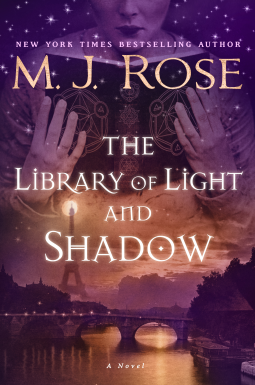
New from M.J. Rose

M.J. Rose was the first really successful indie published writer I was aware of. (I hadn't yet heard of John Locke or Amanda Hocking.) I even had a book she'd written about self-publishing and selling the books herself. Then she got a traditional publishing contract. I liked her books and I liked that she was willing to share her tips. So I've been a fan for five years or so.
M.J. Rose writes lush prose.

I started out reading her Morgan Snow books, and they were a lot of fun. Her more work reminds me of the late, great Tanith Lee, and this new book (available in July) has pretty much everything I love in a book, plus Paris. 

Here's the blurb:

In this riveting and richly drawn novel from “one of the master storytellers of historical fiction” (New York Times bestselling author Beatriz Williams), a talented young artist flees New York for the South of France after one of her scandalous drawings reveals a dark secret—and triggers a terrible tragedy.

In the wake of a dark and brutal World War, the glitz and glamour of 1925 Manhattan shine like a beacon for the high society set, desperate to keep their gaze firmly fixed to the future. But Delphine Duplessi sees more than most. At a time in her career when she could easily be unknown and penniless, like so many of her classmates from L’École des Beaux Arts, in America she has gained notoriety for her stunning “shadow portraits” that frequently expose her subjects’ most scandalous secrets. Most nights Delphine doesn’t mind that her gift has become mere entertainment—a party trick—for the fashionable crowd.

Wednesday, May 3, 2017

Something new in urban fantasy ... Heartblaze 4I lo

I love urban fantasy and it's getting harder and harder to find something that spins the tropes in a new way. Something like Brotherhood of the Wheel doesn't come along every day. This book, though, the first in a new series, is something different in a good way. The author blends an authentic depiction of Viking  civilization with a dark Gothic dream of a supernatural world and the result is fantastastic. Yes, there are werewolves but so much more. (And that "more" includes a heroine is strong and tough and a villain who is as memorable as she is original.) Check it out here.

Monday, May 1, 2017

A picture is worth a thousand words

It's been a while since I bought a poster. (Yes, back in the day I had that Picasso Don Quixote poster that everyone had, along with Ansel Adams' Moonrise over Hernandez, New Mexico.) But I saw this one today and thought about a space I could put it. You can buy it here.

Freebies...urban fantasy box set

I love boxed sets. They're a cheap (often free) way to sample new authors in whatever genre I'm currently interested in reading. And I always love Urban Fantasy. I've read Christine Pope's hosen, from her Djinn series, and I'm a fan of Pippa DaCosta, so I'm looking forward to reading Hidden Blade, as well as Stacy Clafin's Lost Wolf. All the selections in this set are full-length novels, and the myths seem to span everything from Norse to Egyptian gods and everything in between. (I'm a sucker for Egyptian mythology.) You can get this boxed set free right now.